Mixing & Mastering Tip #167 ·
Five ways to use Decapitator in a mix (Craig Bauer's tricks)

Ruslan Slatin
Mastering engineer at SLATIN, Madrid
I’m sure you’ve seen this plugin countless times.
Decapitator is not just a distortion plugin. It’s a Swiss army knife for adding character, harmonics and energy to a mix, and that’s why, to this day, almost every professional mixing engineer uses it.
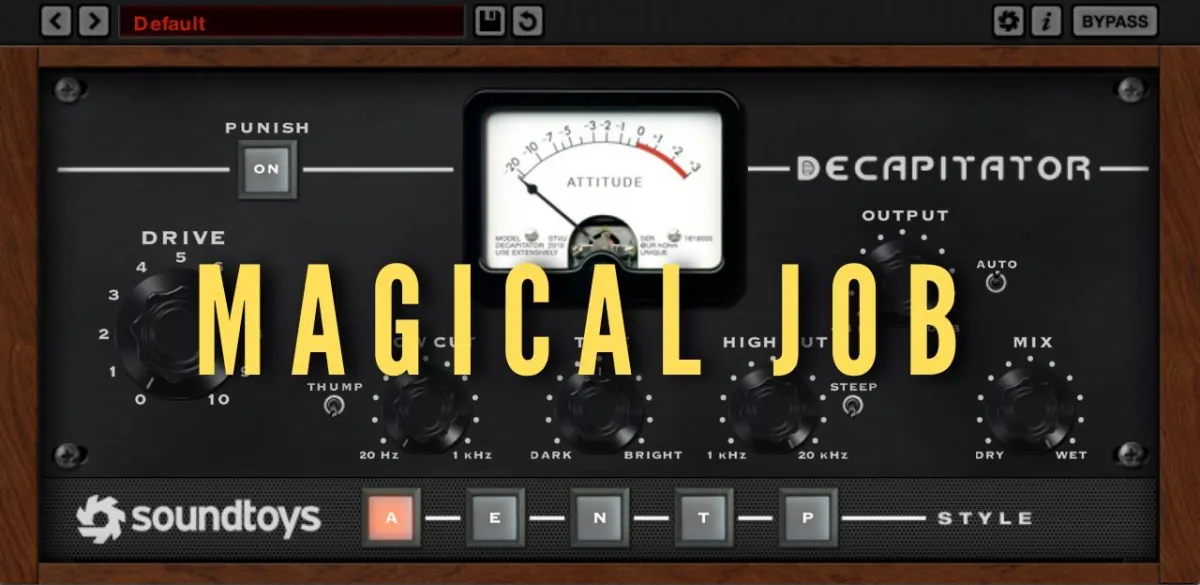
Craig Bauer is one of the most respected mixing engineers in the industry. He shared some insights on how he uses Decapitator on Instagram, and I found his tips very interesting. Here are Craig’s remarks.
1. Parallel on bass
Got a muddy or overly dark bass? Try blending a touch of Decapitator in parallel. Set the drive to around 3 or 4 and blend it back in with the dry signal. It doesn’t just brighten the bass, it adds the upper harmonics that help it sit in the mix. Bonus: the subtle clipping works a bit like compression, smoothing out the dynamics in the process.
2. Rhythmic synths
For melodic or pulsing synths that feel lost, Decapitator works wonders. A gentle drive (3 to 6 range) adds clarity and definition. The wet/dry knob is key here: pull back if it gets too saturated. The tone controls also double as a pseudo-EQ, which makes it versatile for shaping the sound.
3. Funky rhythm guitars
Need some grit on a funky or rhythmic electric guitar? Try it in parallel with a heavier drive (5 to 7 range). Use the tone control to tame the highs slightly. It gives the guitar just the right amount of edge to sit in the mix without overpowering it.
4. Lead vocals with attitude
Whether you’re after subtle warmth or outright distortion, Decapitator delivers. Craig usually adds it at the very end of the vocal chain. Adjust the tone knob to sculpt the highs or lows to taste. It’s incredible how a touch of distortion can add energy and emotional impact to a vocal.
5. Drum bus punch
On drum kits (excluding cymbals and hats), Decapitator adds presence and a touch of aggression. Use it in parallel with a medium drive and fine-tune with the tone controls. Balance it carefully against the dry drums for maximum punch without overdoing it.
Thank you, Craig, for sharing these insights.
Want this on your own track?
I master more than 1,000 songs a year for artists and labels, from stems or a stereo mix. Send me your track and I'll tell you what it needs.
A new tip like this every week, free: join the newsletter.
Work with me
Whenever you're ready, here's how I can help.
 MentoringMix & Master AcceleratorWeekly video reviews of your tracks, live group calls, and the business side of a studio career.By applicationApply now
 Preset packFUSION150 hand-crafted Valhalla VintageVerb presets. Three clicks to the sound you already hear in your head.20€Get the pack
 CourseAdvanced MicrodynamicsFour hours on the micro-level movement that makes a mix feel alive. Joined by 220+ students.149€See the course
 CourseLow End MasteryKick and bass chemistry, so your low end lands on club rigs and earbuds alike. Joined by 500+ students.159€See the course
 SoftwareStudiOSThe software I run my own studio on: deliveries, client feedback, versions and invoices in one place.14 days freeTry StudiOS