Mixing & Mastering Tip #202 ·
Why the Pensado EQ2 low band doesn't behave like a normal EQ

Ruslan Slatin
Mastering engineer at SLATIN, Madrid
If you’ve ever pulled up the Pensado EQ2 and reached for that big glowing LOW knob, you might’ve thought: “Wait a sec… this doesn’t feel like a normal EQ.”
And you’d be right.
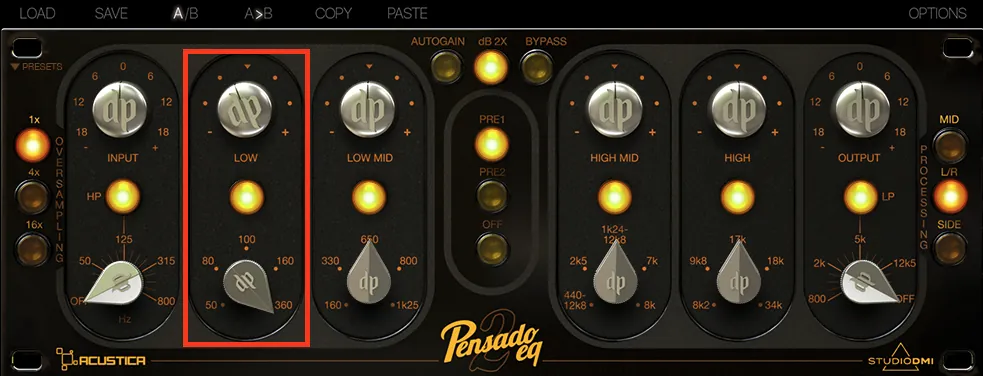
Most EQs boost or cut: a simple bell, shelf, or maybe a fancy curve.
But the LOW band on Pensado EQ2 does something different. Instead of a standard EQ band at 50 Hz and 80 Hz, it introduces some pretty unique shapes.
That’s a whole other animal.
Why it feels so different
When you crank 50 Hz or 80 Hz on a “normal” EQ, you’re just telling it: “Hey, more lows, please.” The curve goes up, and boom, instant bass boost.
But with Pensado EQ2’s low band, you boost and cut simultaneously in a very narrow area, so besides affecting the volume of the frequencies, what you’re really doing is reshaping the timing of those low waves.
The plugin pushes and pulls the phase of the subs, which makes the kick, bass and low end move differently in time.
And that can make a kick or bass feel and resonate longer.
Interesting, right? The diagram of these shapes comes from the Pensado EQ2 manual.
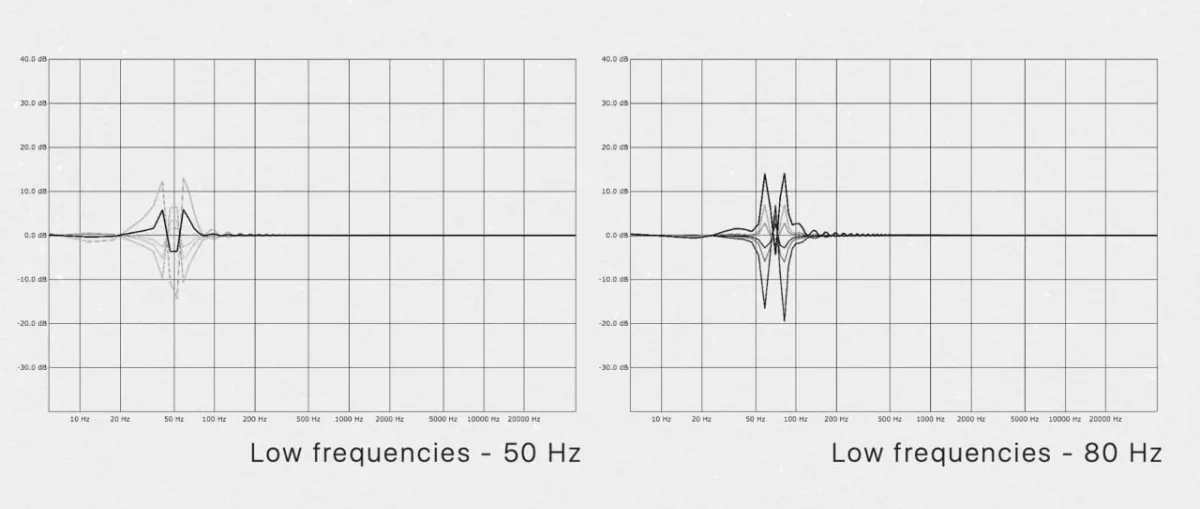
That’s why when you sweep between 50 Hz and 80 Hz, it’s not just louder or quieter. The shape and sensation of the low end can change considerably.
Why Dave wanted it this way
Dave Pensado has always said he doesn’t like “flat and boring” EQs.
He wanted something that moves air the way hardware does. In the interview, he even mentions how the low band is his “secret sauce” for sculpting bass-heavy mixes without stacking tons of plugins.
The team at Acustica and Studio DMI basically sampled the phase behavior of real gear and baked it into this band.
So instead of a sterile digital boost, you get a very human, analog-style response.
Think of it less like “turning up bass” and more like shaping the way the low end feels.
It proves EQ doesn’t always have to be about boring, strict frequency boosts and cuts.
Sometimes the mojo comes from phase shifts and harmonic enhancements, which is precisely what makes hardware beloved in the first place.
Want this on your own track?
I master more than 1,000 songs a year for artists and labels, from stems or a stereo mix. Send me your track and I'll tell you what it needs.
A new tip like this every week, free: join the newsletter.
Work with me
Whenever you're ready, here's how I can help.
 MentoringMix & Master AcceleratorWeekly video reviews of your tracks, live group calls, and the business side of a studio career.By applicationApply now
 Preset packFUSION150 hand-crafted Valhalla VintageVerb presets. Three clicks to the sound you already hear in your head.20€Get the pack
 CourseAdvanced MicrodynamicsFour hours on the micro-level movement that makes a mix feel alive. Joined by 220+ students.149€See the course
 CourseLow End MasteryKick and bass chemistry, so your low end lands on club rigs and earbuds alike. Joined by 500+ students.159€See the course
 SoftwareStudiOSThe software I run my own studio on: deliveries, client feedback, versions and invoices in one place.14 days freeTry StudiOS